A discreet presence at our side, protecting without being seen. The idea of the guardian angel has crossed centuries and beliefs. Here is where it comes from, and why people still love to give it.
A very old idea
The word angel comes from the Greek 'angelos', the messenger. In the Bible, angels carry God's messages and protect people. Psalm 91 promises: 'He shall give his angels charge over thee, to keep thee in all thy ways.' And in the Gospel of Matthew, Christ says of the little ones that 'their angels do always behold the face of my Father'.
An angel for each person
From these texts came the tradition that every person receives an angel who accompanies them from birth to death. The Catholic Church celebrates it on 2 October. Far beyond religion, the guardian angel has become a universal image: someone who watches over us, even from afar.
Someone watching over you, even from afar.
The cherub, from the Renaissance to today
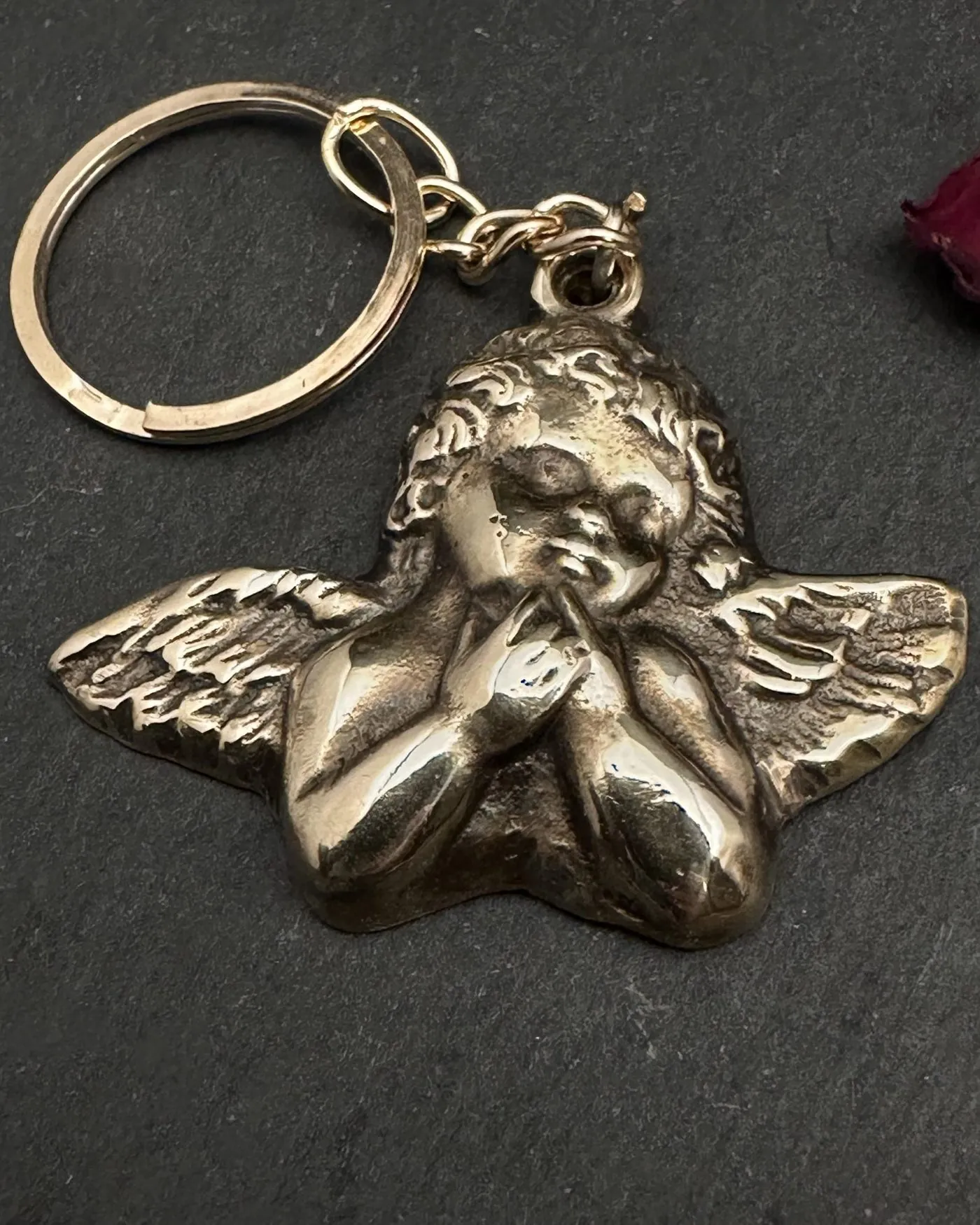
Renaissance painters gave the angel the features of a winged child, the cherub. The most famous are the two little angels leaning on their elbows, chin in hands, at the bottom of Raphael's Sistine Madonna: thoughtful, tender, a little dreamy. They have become the very image of the guardian angel.
Why give a guardian angel
It is given for a birth, a baptism, a journey, a driving licence, a hardship, or in memory of a loved one we imagine still watching over us. As a keychain, it is an angel that goes everywhere with you, in your pocket or on your keyring.
The AIRAIN angel takes the pose of the thoughtful cherub, wings open. Sand-cast in 29 g of solid Airain bronze, it has real weight in the hand.
Frequently asked questions
When is the feast of the guardian angels?
On 2 October, in the Catholic tradition.
Why give a guardian angel?
As a sign of protection: birth, baptism, travel, driving licence, hardship, or in memory of a loved one.