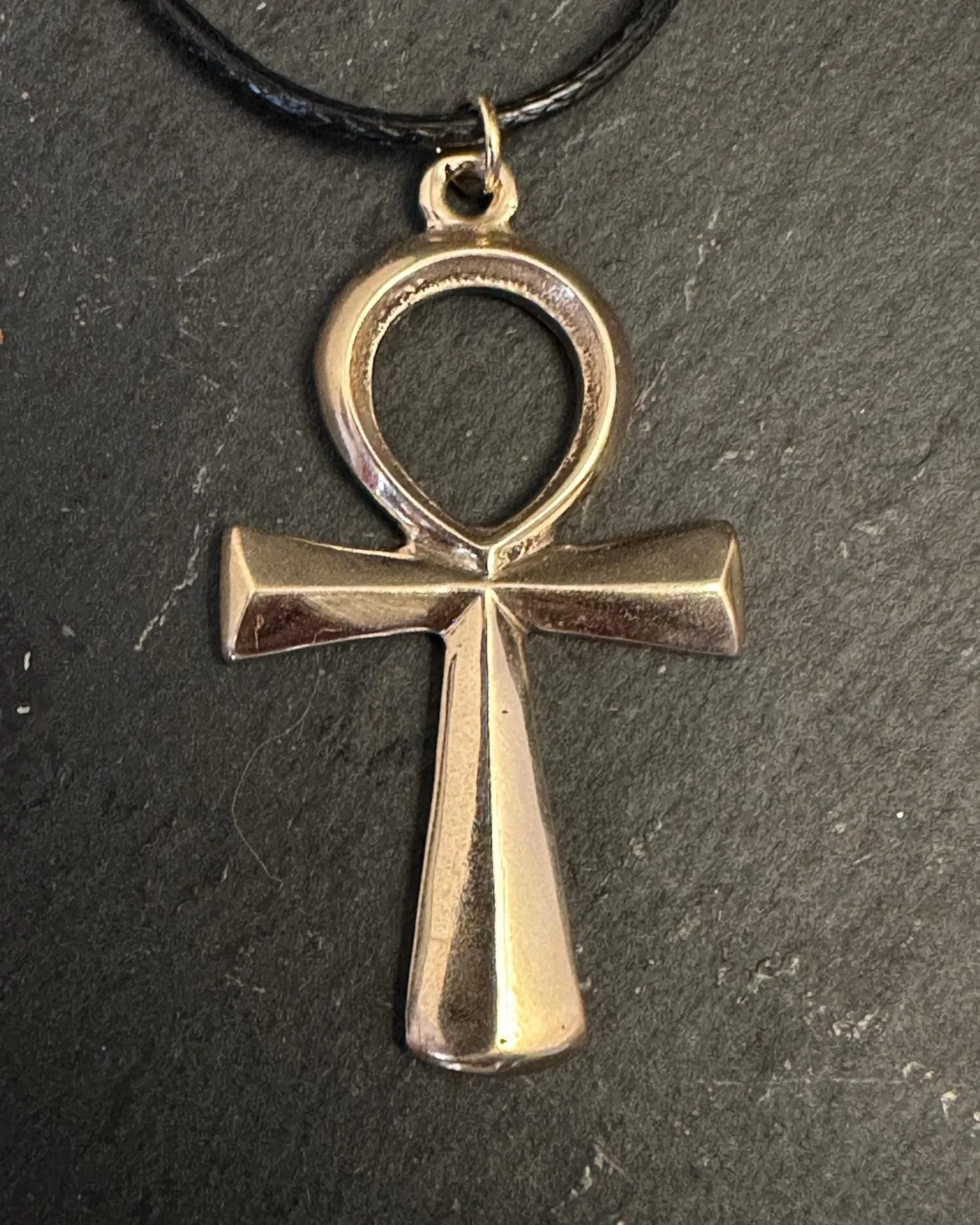
A cross topped with a loop. For the Egyptians, it was not an ornament: it was the very sign of life. Here is what the Ankh means, and why it has crossed the millennia.
The hieroglyph of life
In Egyptian writing, the Ankh is a hieroglyph read 'ankh' and meaning 'life'. It is also called the crux ansata, the handled cross, because of its loop. Its exact origin is still debated: a knot, a sandal strap, a belt… but its meaning leaves no doubt.
The breath of life of the gods
On the walls of temples and tombs, the gods hold the Ankh by its loop and present it to the pharaoh's face, as if to give him the breath of life. It also accompanies the dead: the life it promises does not end with death.
Ankh: life.
From Egypt to the Copts
The symbol outlived pharaonic Egypt. The first Christians of Egypt, the Copts, adopted it as a form of cross: eternal life took over from divine life. Today the Ankh is worn as a symbol of life, protection, rebirth and balance.
The AIRAIN Ankh
The AIRAIN Ankh pendant follows the classic shape of the cross of life, with a loop and slightly flared arms. It is sand-cast in solid Airain bronze, the alloy of Antiquity, then polished by hand. Bronze was already the metal of the Egyptians: here it keeps its warm golden glow.
Frequently asked questions
What does the Ankh mean?
It is the Egyptian hieroglyph for life. It symbolises life, the divine breath and eternity.
What is the difference between the Ankh and the Christian cross?
The Ankh has a loop at the top. It is much older; the Copts later adopted it as a cross.
Can you give an Ankh as a gift?
Yes, it is a symbol of life and protection, much appreciated for a birth, a birthday or a new start.