Same golden colour, same family, and constant confusion, even in jewellery listings. Yet bronze and brass have neither the same history, nor the same qualities, nor the same price. Here is the complete guide so you never mix them up again.
In short
Bronze: copper and tin. Brass: copper and zinc. Bronze is harder, denser, more resonant, develops a warm brown patina and costs significantly more. Brass is yellower, easier to work and much cheaper. That is why it often replaces bronze in low-cost jewellery.
The composition
Both alloys start from copper. Classic bronze contains about 88 to 90%, completed by 10 to 12% tin. Brass usually contains 60 to 70% copper and 30 to 40% zinc. There are variants: aluminium and phosphor bronzes, bell bronze richer in tin, leaded brasses for machining. But the rule stays simple: tin for bronze, zinc for brass.
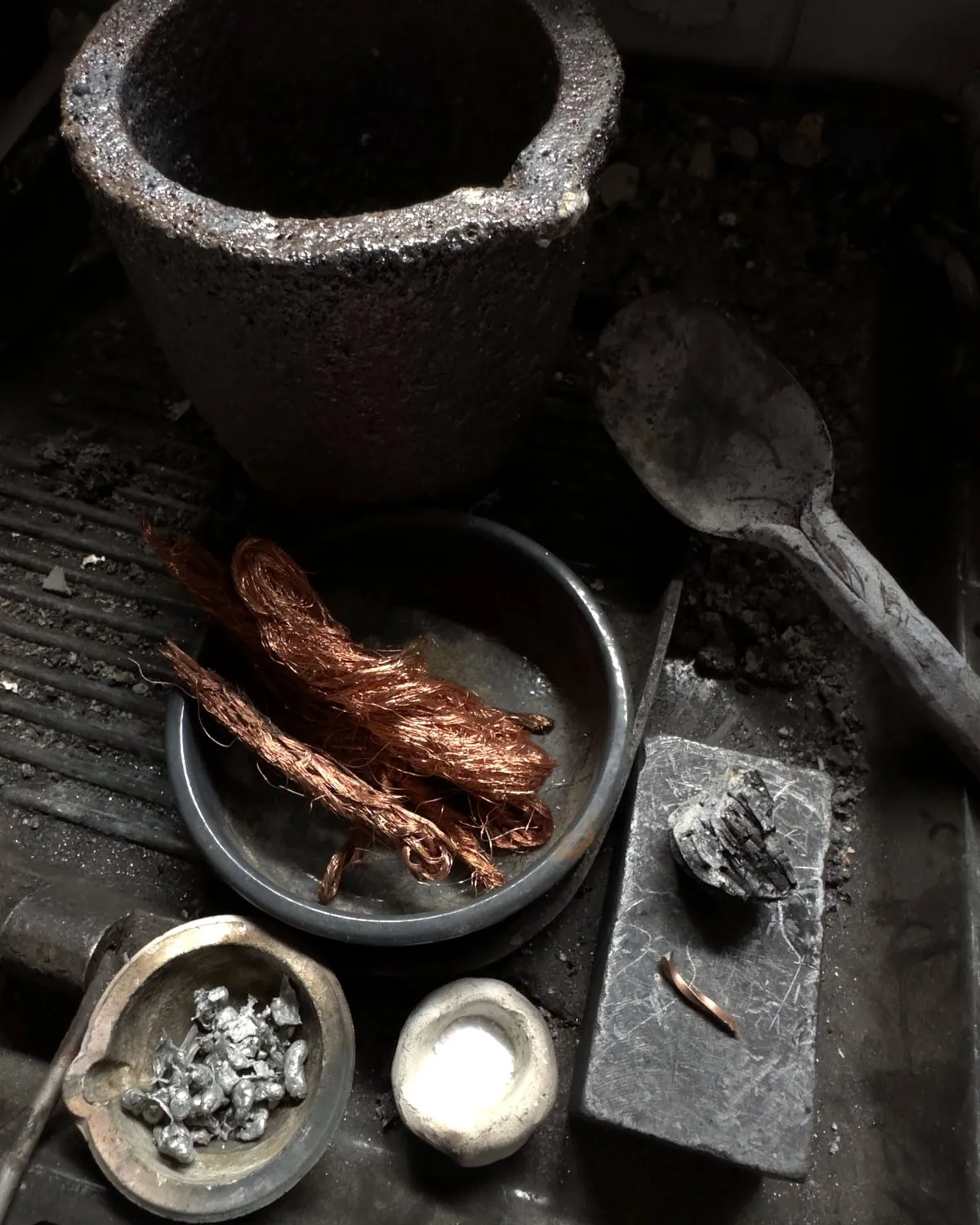
AIRAIN's Airain bronze contains about 90% copper and 10% tin, 100% recycled. No zinc, no added lead, no nickel.
Two very different histories
Bronze is one of humanity's first alloys. It gave its name to an entire era, the Bronze Age, when people learned to marry copper and tin to obtain a metal harder than either. Weapons, tools, mirrors, statues, bells: for millennia, bronze was the metal of what must last.
Brass came later. Zinc, hard to isolate, was long added to copper in ore form. Brass became common in Roman times, then triumphed with industry: taps, instruments, ammunition, buttons, hardware. It is a utility metal, practical and economical.
Bronze is the metal of what must last.
The colour
Brass is a bright, luminous yellow, sometimes slightly sharp: the more zinc it contains, the yellower it gets. Bronze is warmer and deeper: a rosy gold leaning towards golden brown. Side by side, the difference is obvious. On its own it is harder, and some brasses are tinted to imitate bronze.
Hardness, weight, sound
Bronze is harder and more wear-resistant than most brasses: it dents less, scratches less, keeps its reliefs better. It is also slightly denser, so a little heavier for the same volume. And it rings: that is why bells and cymbals are made of bronze. A bronze piece you tap gives a clear, lingering sound, where brass sounds duller.
Patina and corrosion
Over time, bronze takes on a stable, protective brown patina that settles in the hollows and brings out the reliefs. It is the patina of ancient statues. Brass tarnishes too, but in some damp or salty environments it can lose its surface zinc, a process called dezincification: it becomes porous and reddish. Bronze does not suffer from this.
Both metals contain copper: on some skin, they can leave a faint green mark, harmless, which washes off with soapy water.
The price
This is the real reason for the confusion. Tin currently costs more than ten times as much as zinc per tonne. A jewel sold 'in bronze' at a very low price is therefore almost always brass, or plated metal. The word 'bronze' is also sometimes just a colour: a 'bronze necklace' is not necessarily made of bronze.
How do you know if a jewel is really bronze?
Read the composition: a serious seller states copper and tin, and their proportions. Beware of vague words such as 'gold-tone metal', 'bronze finish' or 'antique bronze' without details. Look at the shade: a very bright yellow suggests brass. Tap the piece. And ask the seller: whoever casts their own metal knows exactly what goes into it.
The magnet test is useless: neither bronze nor brass is magnetic. If it attracts, it is another metal underneath a coating.
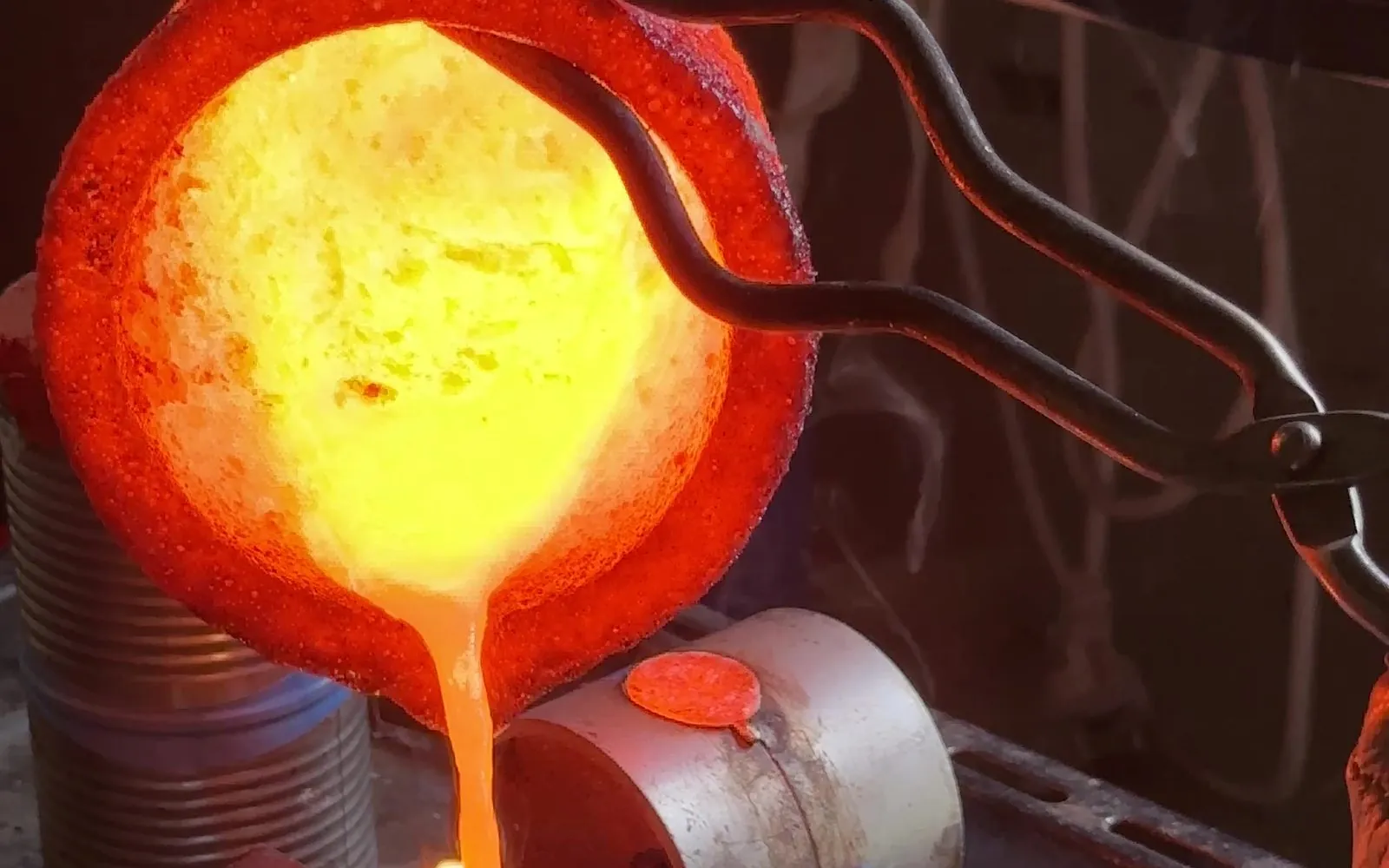
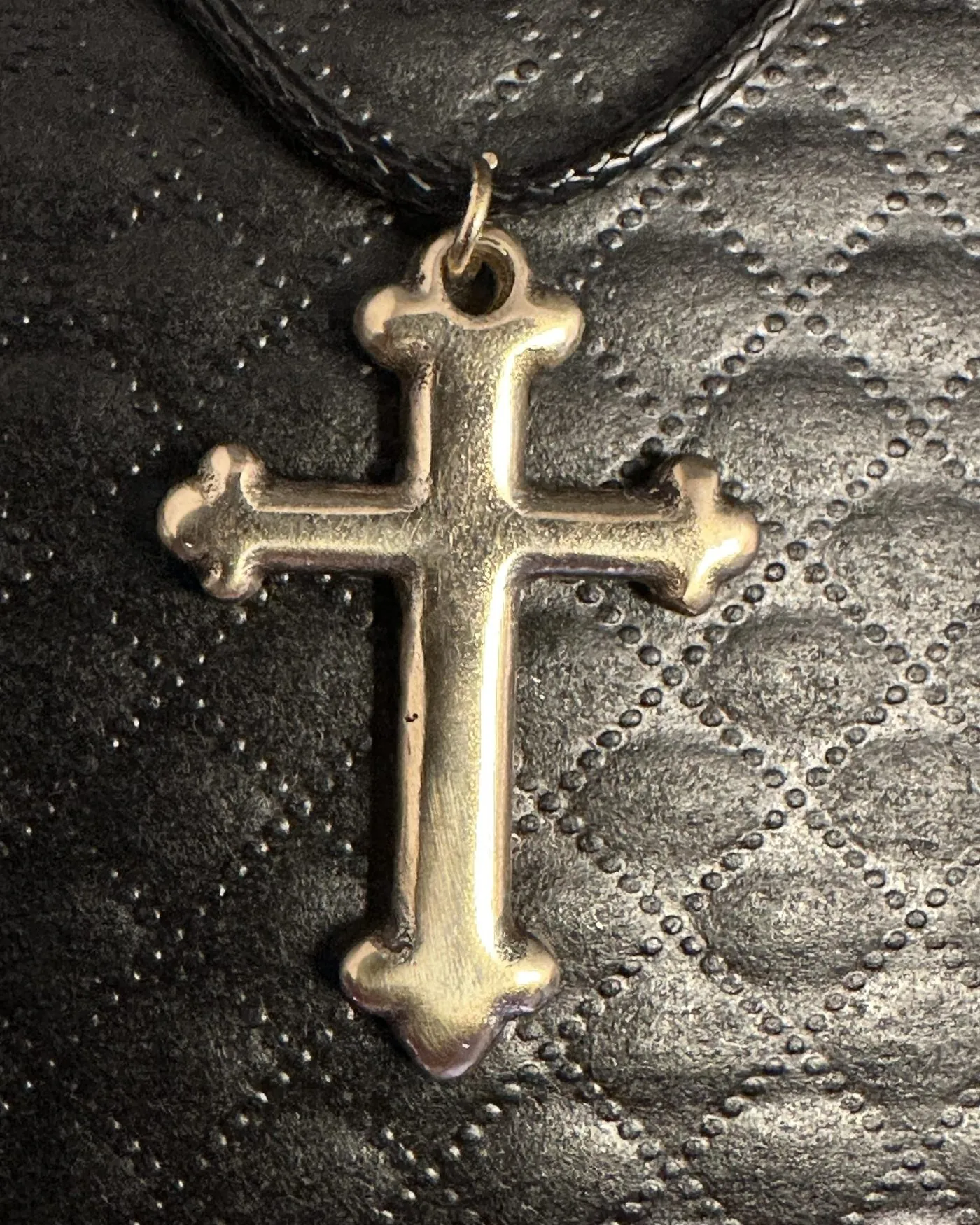
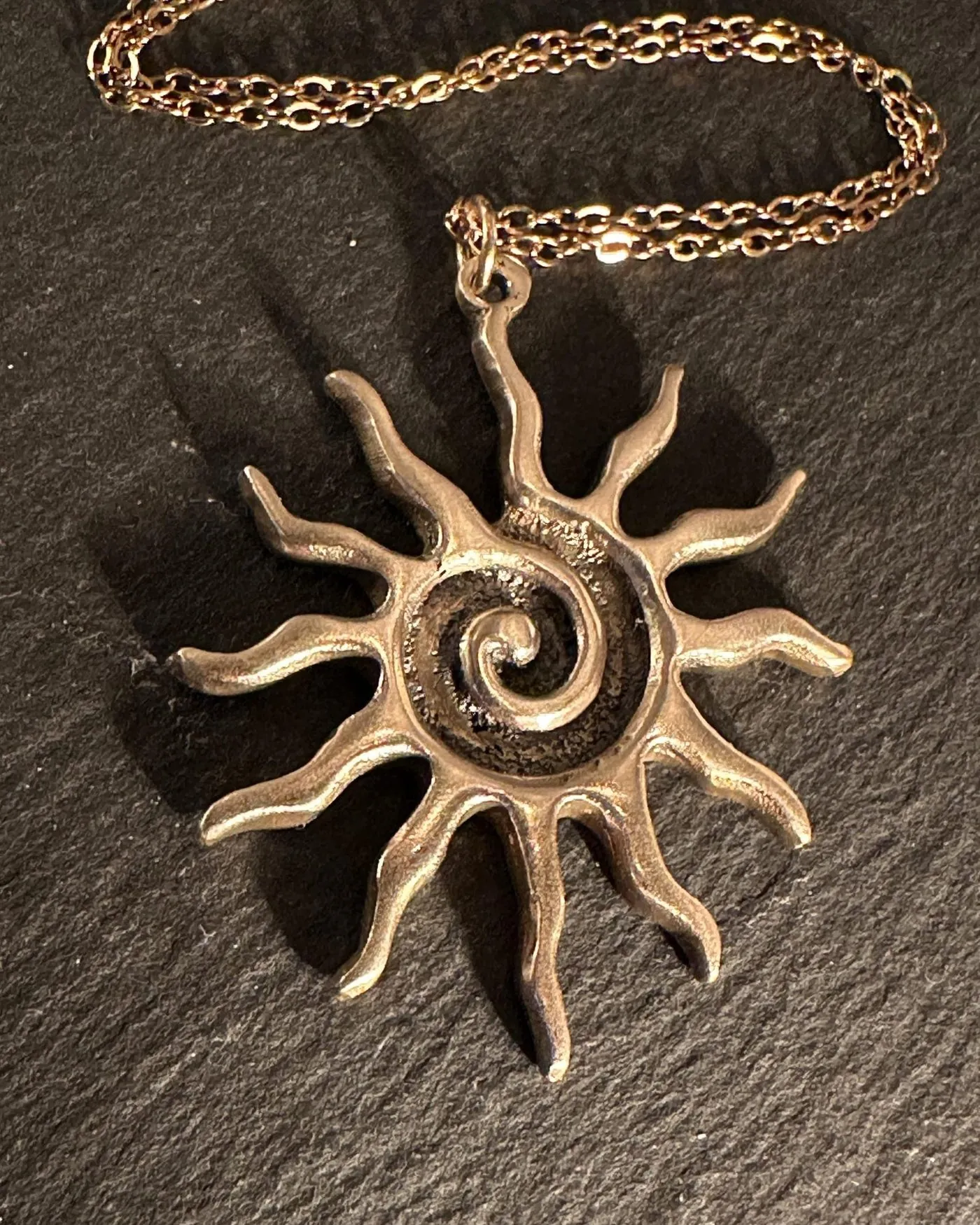
At AIRAIN, every piece is hand-cast in a sand foundry in Aveyron, France, in solid Airain bronze of about 90% copper and 10% tin, 100% recycled. Never brass.
Frequently asked questions
What is the difference between bronze and brass?
Bronze is an alloy of copper and tin, brass an alloy of copper and zinc. Bronze is harder, more resonant, warmer in tone, develops a brown patina and costs more.
Why is bronze more expensive than brass?
Because tin costs more than ten times as much as zinc.
Can a magnet identify bronze?
No: neither bronze nor brass is magnetic. Rely on the composition, the shade and the sound.
What is AIRAIN bronze made of?
About 90% copper and 10% tin, 100% recycled, with no zinc or nickel.