“Knowing how to melt is not enough. One must know why one melts.”
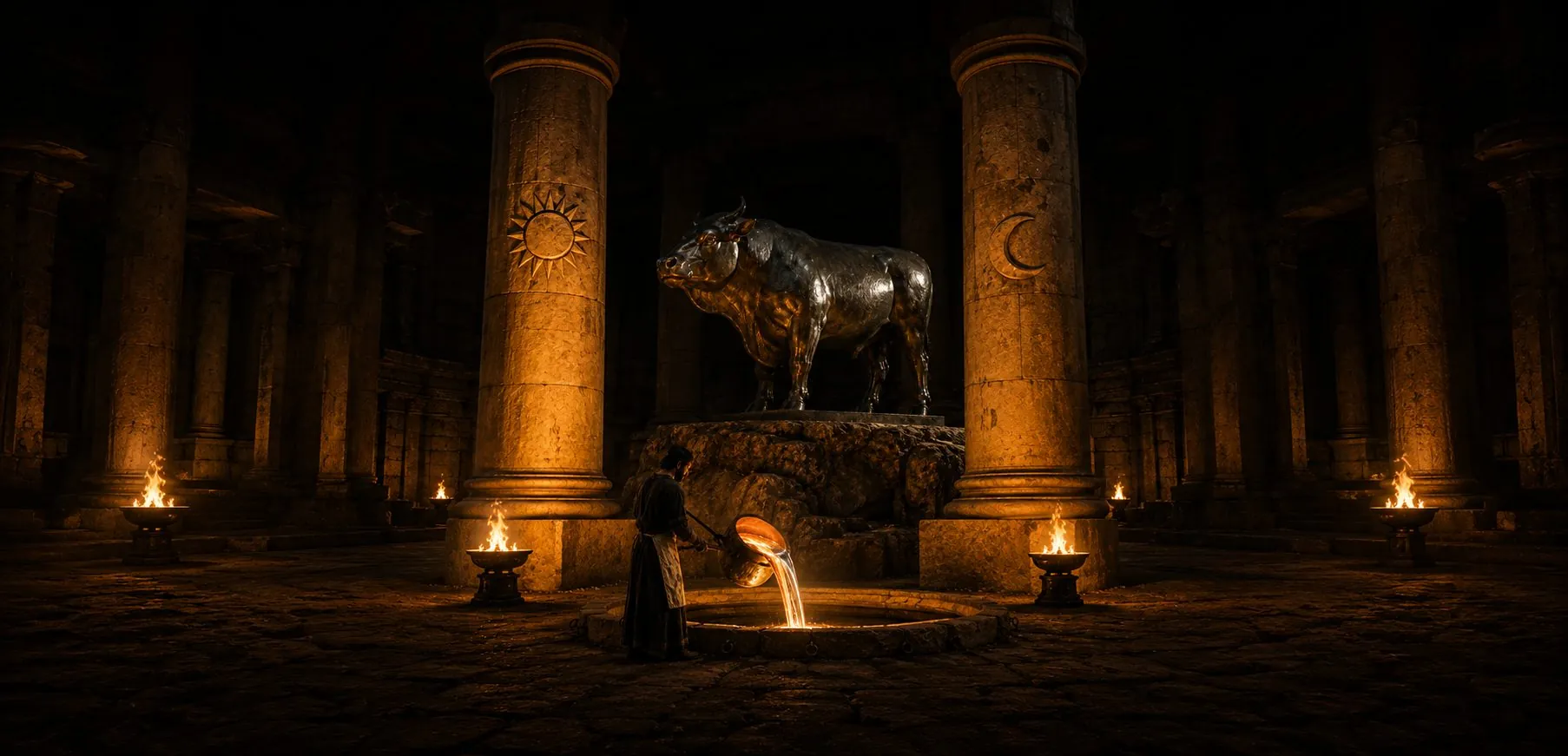
Three thousand years ago, in the forecourt of Solomon's Temple, stood a colossal bronze basin: Yam ha-Nechoshet, the Sea of Bronze. Ten cubits across. Cast in a single piece by a master who came from Tyre, whom the texts name Hiram, “skilled in all work of bronze”.
This basin was not a mere vessel. It was a reconciliation: metal born of the flame, carrying the water of purification. Fire and Water, united in bronze.
Hiram knew two things, and the texts never separate them: he knew how to melt, and he knew why he melted. His hands worked real metal, the heat, the possible burn, the matter that obeys. And the same gesture carried a meaning that metal alone does not tell: to melt is to dissolve what was fixed. To pour is to accept a new form. To cool is to be reborn transformed.
Airain bronze has not changed since. Nine parts of copper, the solar metal, ardent, active. One part of tin, the lunar metal, supple, receptive. Their fusion in the furnace is a dissolution; their setting in the mould, a birth. Solve et Coagula. Every pour silently replays this very ancient mystery.
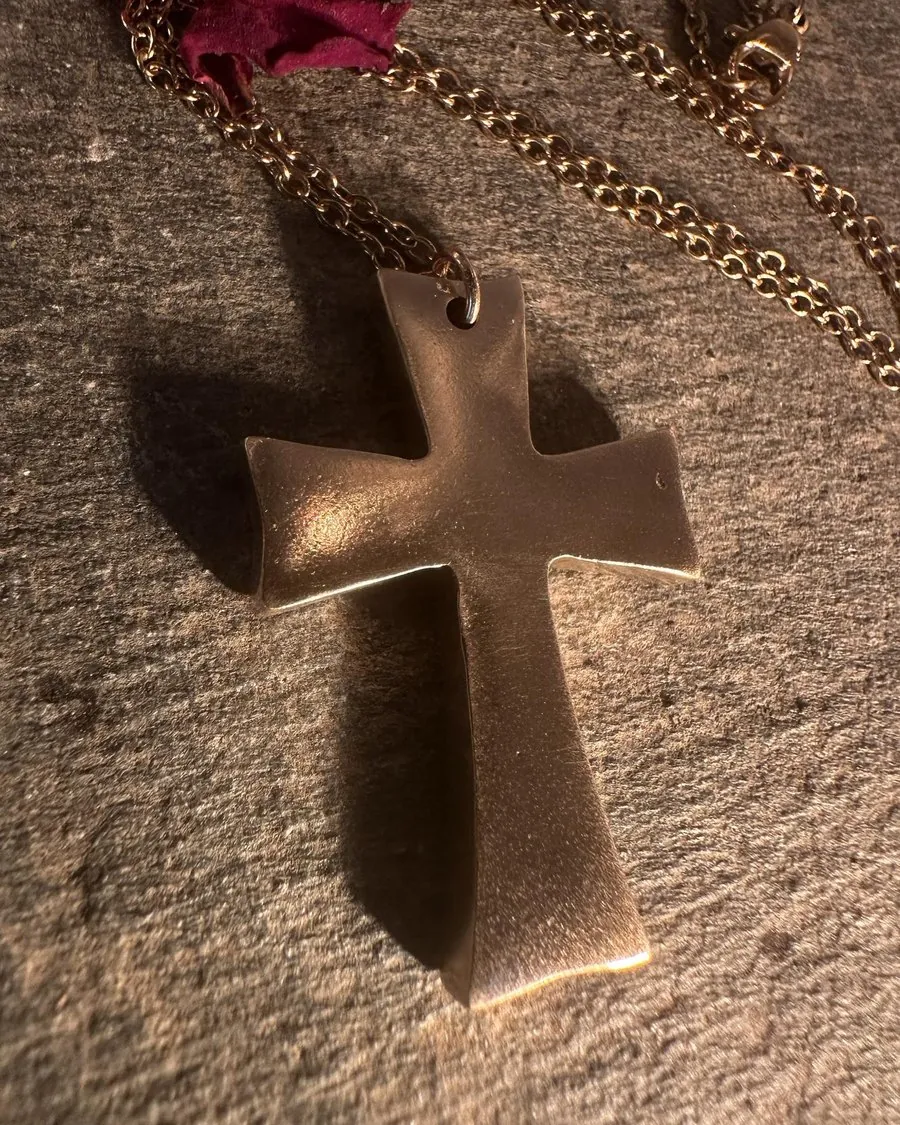
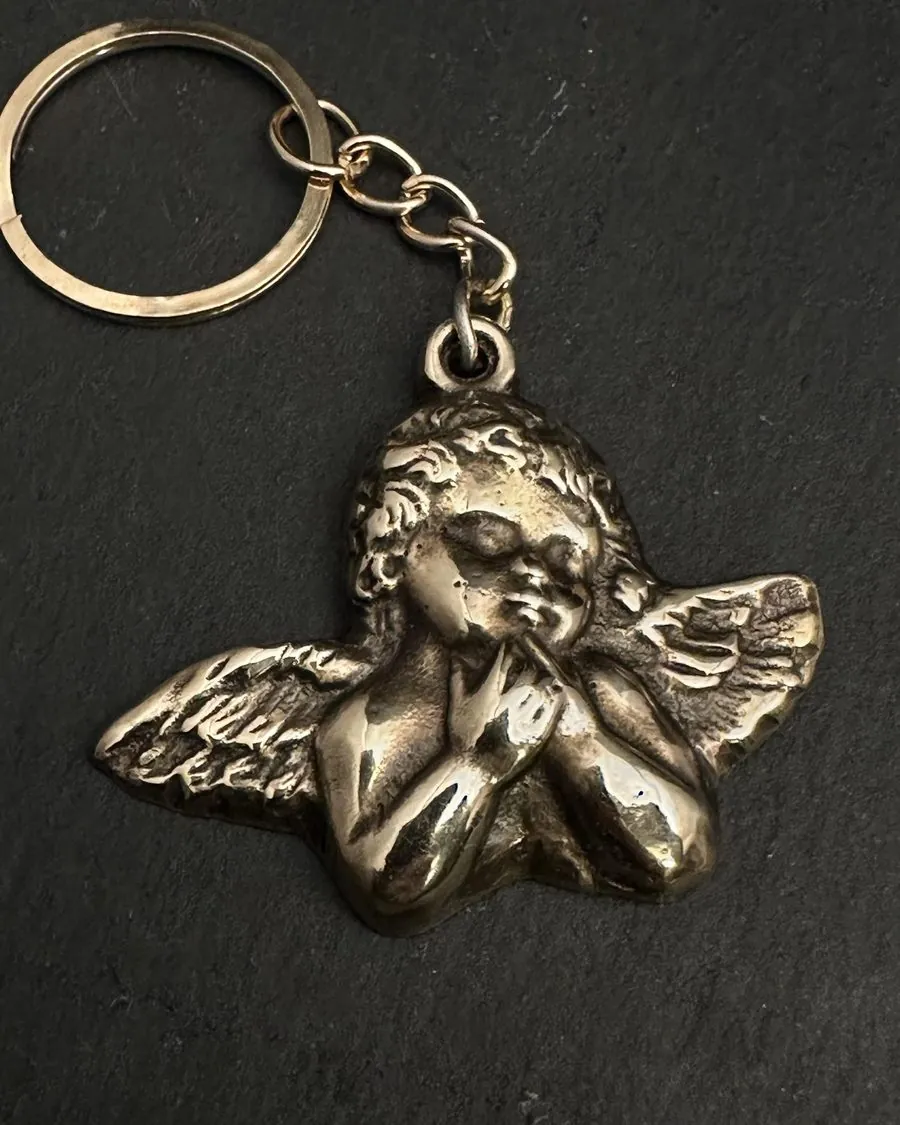
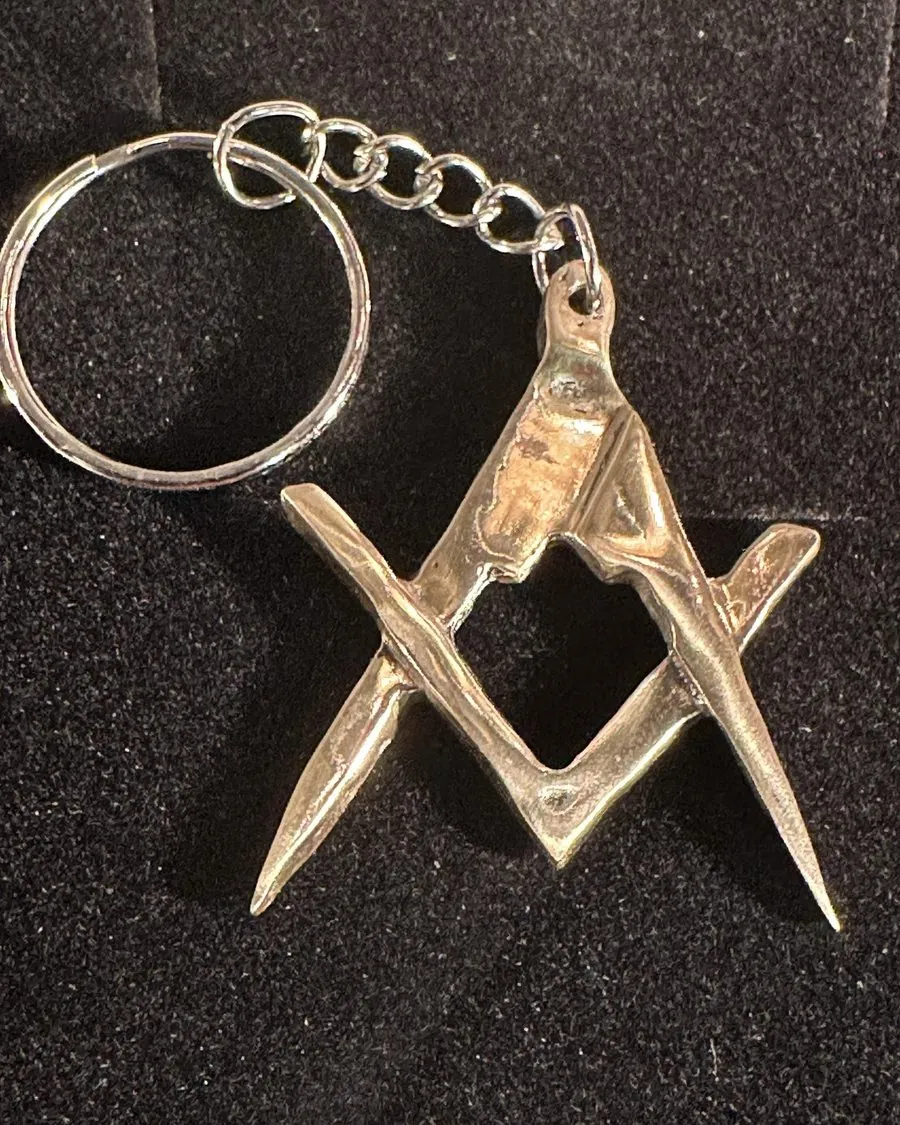
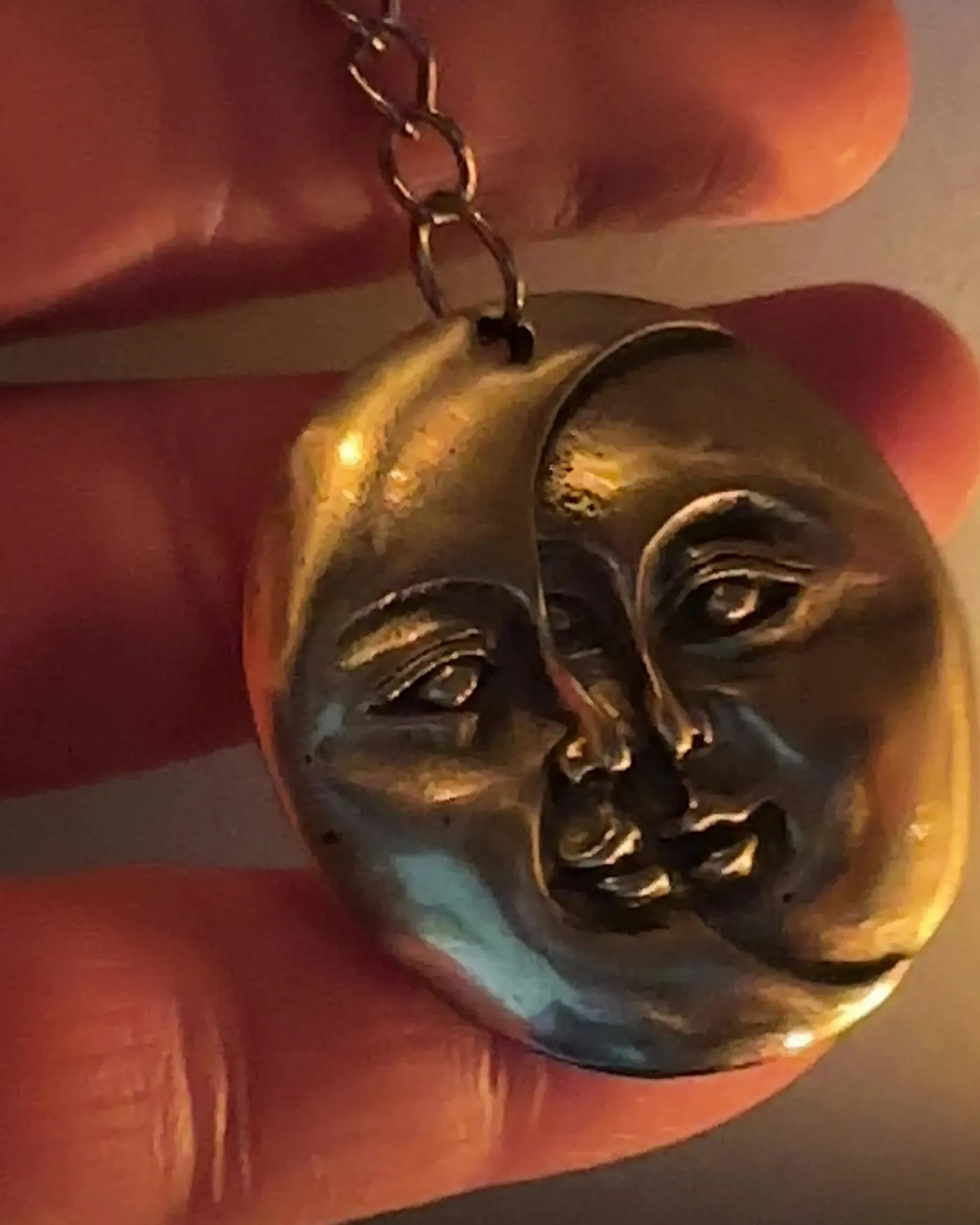
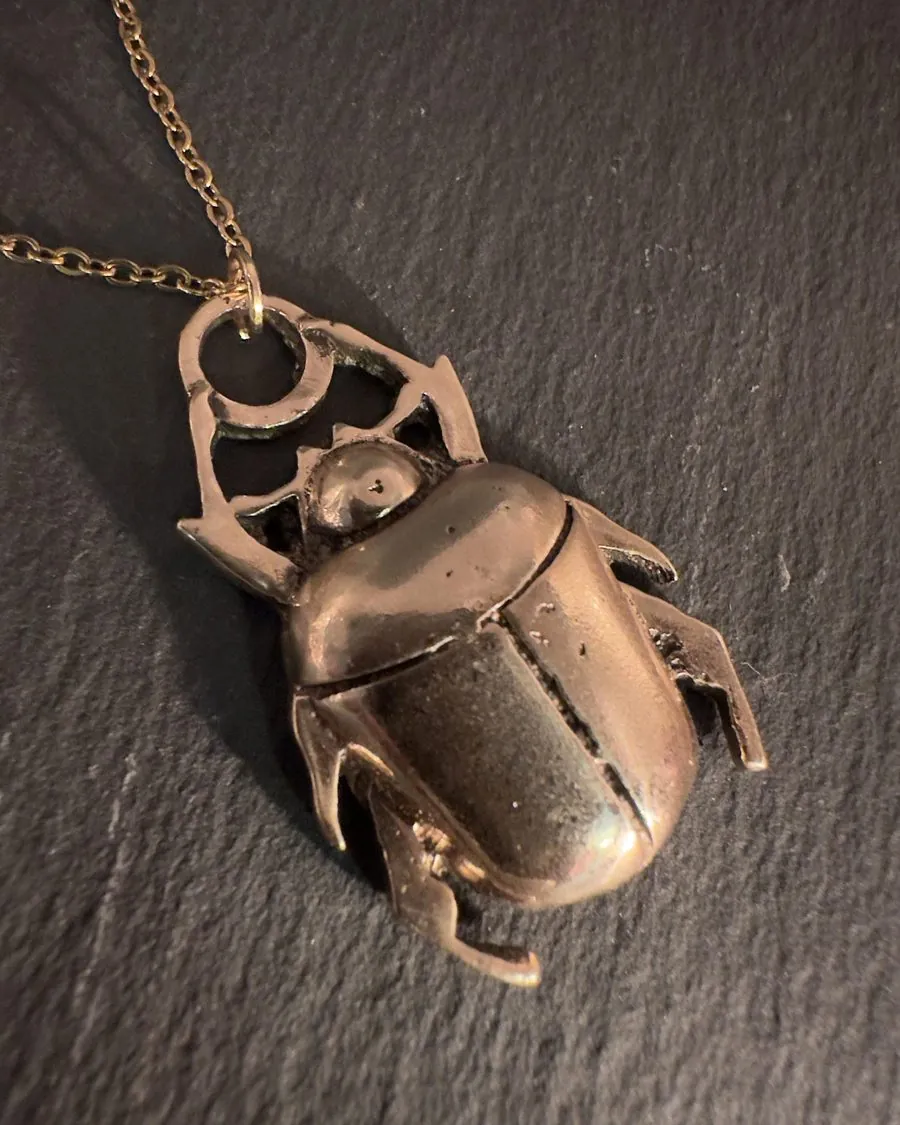
AIRAIN belongs to this lineage. In a workshop in the heart of Aveyron, recycled bronze melts in the flame, flows into the sand, and fixes in metal symbols that the centuries have not worn away. No two pieces are alike: fire never repeats itself.
Metal remembers the fire long after it has cooled. Whoever wears a piece of AIRAIN carries that memory, knowingly, or without knowing.
Airain is the old French word for bronze, the word of ancient texts, bells and statues. It is the word of the Temple's Sea of Bronze, and of the very metal we still cast today.